

Key Takeaways
A faulty ABS pump can make a rapid buzz, whine, grind, or repeated clicking, but sound alone cannot identify the failed part. Pay attention to when the noise occurs and whether warning lights, pedal changes, or altered stopping performance appear with it.
- ABS activation noise is usually brief and tied to hard braking or slippery conditions.
- A pump that runs during ordinary driving deserves prompt inspection.
- Warning lights and changes in pedal feel make the noise more urgent.
- Wheel bearings, brake hardware, boosters, and tires can sound similar.
- Do not disconnect or disable the ABS system to silence it.
What a faulty ABS pump typically sounds like
If you are wondering what does a faulty abs pump sound like, start with the character and timing of the noise rather than its volume. The pump and motor sit within a larger hydraulic and electronic assembly, so several faults can produce overlapping sounds. A recording can help a technician, but it should not replace a proper brake inspection.
Rapid buzzing or grinding during braking
A healthy ABS system may buzz rapidly when it is actively modulating brake pressure, usually during hard braking or when one or more wheels begin to lose traction. A failing pump can sound harsher, more strained, or more like a rough grind than a short controlled buzz. If the noise repeats during gentle stops on dry pavement, treat that pattern as abnormal rather than assuming it is normal ABS operation.
The ABS hydraulic pump is part of the system that helps prevent wheel lockup, but the sound may also come from the motor, valves, or nearby mounting points. Avoid touching the assembly while it is operating; the motor can start unexpectedly.
Repeated clicking or pumping noises
Repeated clicks or short pumping cycles may indicate that the system is trying to build or maintain hydraulic pressure. The noise can be heard near the ABS unit, often in the engine bay, and may be more noticeable after the vehicle has been parked. A single brief cycle is not automatically a fault, but frequent cycling without a clear braking event is worth diagnosing.
A useful clue is whether the noise changes when you press the brake pedal. If it returns quickly after each pedal application, the system may be struggling to hold pressure, although a relay, sensor, or another hydraulic component can create a similar pattern.
Whining that continues after the engine starts
A high-pitched whine that continues after startup is more concerning than a short sound during an emergency stop. It can reflect an electric motor working harder than it should, repeated pressure correction, or a fault elsewhere in the brake-control assembly. Cold temperatures may change the sound, but a cold-start pattern still deserves attention if warning lights appear or the noise lasts.
Do not diagnose the pump solely by standing beside the car. Sound travels through the body and engine bay, and a brake booster, vacuum pump, or belt-driven accessory can seem to come from the same area.
How normal ABS activation sounds different
Normal ABS activation is generally brief and event-based. You may feel a fast pedal pulsation and hear a buzzing or chattering sound while braking hard on a wet, loose, or slippery surface; both should stop when the intervention ends. It should not normally continue during steady cruising or every ordinary stop.
The difference is often clearest when you compare the noise with the driving event. A short, repeatable sound during genuine wheel slip is different from a motor that starts while idling, cycles in traffic, or remains active after the brake pedal is released.
When ABS pump noises indicate a problem
The same sound can be harmless in one situation and a warning in another. Timing, frequency, dashboard indicators, and pedal behavior provide a more reliable picture than the sound by itself. If several clues appear together, arrange an inspection before normal use turns a manageable fault into a braking-safety issue.
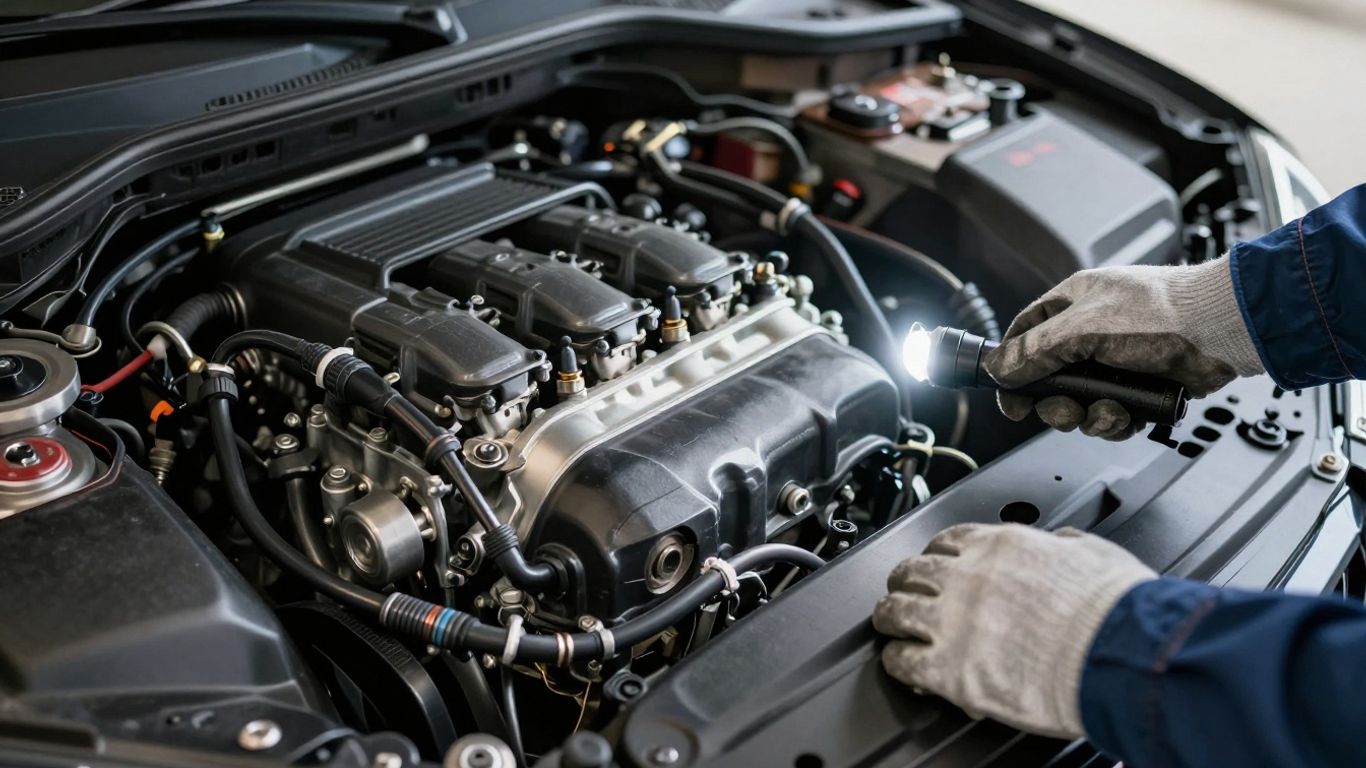
Noise during normal driving without hard braking
An ABS pump should not routinely run while the vehicle is simply cruising, idling, or making gentle stops. Noise at those times may mean the unit is correcting pressure unnecessarily, receiving incorrect information, or responding to a hydraulic leak. It can also point to a different component, so the location and conditions should be recorded carefully.
Make a note of whether the sound starts after ignition, after a turn, at low speed, or when the brake pedal is untouched. Those details can help separate a pressure-related complaint from a wheel-speed signal problem.
Increasing frequency or duration of the sound
A noise that lasts longer or occurs more often suggests that the system is operating under worsening conditions. The motor may be compensating for pressure loss, or an electrical control problem may be commanding repeated operation. An occasional brief cycle still merits a check if it is new, but a clear upward trend should move the inspection higher on your list.
Do not keep testing the vehicle by repeated hard stops on public roads. A mechanic can reproduce the complaint in a controlled setting without adding unnecessary risk.
Sounds paired with an ABS warning light
An ABS warning light means the vehicle has detected a fault or stored an error in the anti-lock system. Depending on the vehicle, the conventional brakes may still work while ABS, traction control, or stability functions are unavailable. The ABS control unit signs can overlap with pump symptoms, including unusual noise, warning lights, and changes in pedal response.
A warning light that disappears after restarting should not automatically be dismissed. Intermittent faults can return under heat, vibration, moisture, or a particular wheel-speed condition, so the stored code remains useful even when the lamp goes out.
Changes in brake pedal feel or stopping performance
A sinking, unusually firm, pulsing, or unresponsive pedal raises the seriousness of any ABS noise. So does a vehicle that takes longer to stop, pulls to one side, or feels as though braking assistance changes from one stop to the next. These symptoms can come from air, low fluid, worn friction components, or hydraulic-control faults rather than the pump alone.
If stopping performance has changed, drive only as far as needed to reach a safe location or repair facility. The noise is secondary to whether the vehicle can stop predictably.
Other sounds that can be mistaken for an ABS pump failure
The ABS unit is not the only source of noise around the brakes and front wheels. Road speed, engine speed, steering angle, and whether the pedal is pressed can help narrow the field. Listening from inside the cabin is useful, but a technician should confirm the source before an expensive component is replaced.
Brake pad and rotor noises
A scraping sound that follows wheel rotation may come from a worn pad, backing plate, trapped debris, or rotor surface rather than the ABS pump. A rhythmic vibration during braking can also be associated with brake hardware or rotor condition. These noises usually track vehicle speed and brake application more directly than an electric pump does.
Look for changes when braking lightly, turning, or releasing the pedal. Never rely on sound alone to judge remaining pad material; visual inspection and measurements are safer.
Wheel bearing humming or grinding
Wheel bearings commonly produce a hum, growl, or rough grinding that rises with road speed. The sound may change when the vehicle loads one side during a gentle turn, while an ABS pump noise is more likely to follow braking or an electrical command. A damaged bearing can also affect wheel-speed readings, which makes the distinction especially important.
If the noise follows speed even when the brake pedal is untouched, ask for the wheel bearings and tires to be checked alongside the ABS system.
Brake booster and vacuum pump sounds
A booster or vacuum pump can make a hiss, click, whine, or short motor sound near the firewall or engine bay. A change in pedal effort, particularly a hard pedal, may point toward brake assistance rather than the ABS hydraulic pump. Some vehicles use electrically driven vacuum equipment, so the sounds can overlap.
The cold-start brake noise discussion illustrates why temperature and startup timing are useful clues, but an anecdotal pattern cannot identify the faulty component on every vehicle.
Tire, suspension, and drivetrain noises
Tires can thump or hum because of uneven wear, while suspension joints may clunk over bumps or during steering. A driveshaft, belt, alternator, or engine accessory can also create a whine that seems to come from the brake area. These sounds often respond to road surface, engine speed, steering, or suspension movement instead of brake pressure.
Before assuming the ABS pump has failed, describe exactly what changes the noise. That simple comparison can prevent replacing an expensive assembly when the source is elsewhere.
Symptoms that often accompany a failing ABS pump
Noise becomes more meaningful when it arrives with a functional symptom. The following signs do not prove that the pump itself has failed, because sensors, wiring, valves, and basic hydraulic problems can produce similar results. Together, however, they justify prompt diagnosis rather than continued observation.
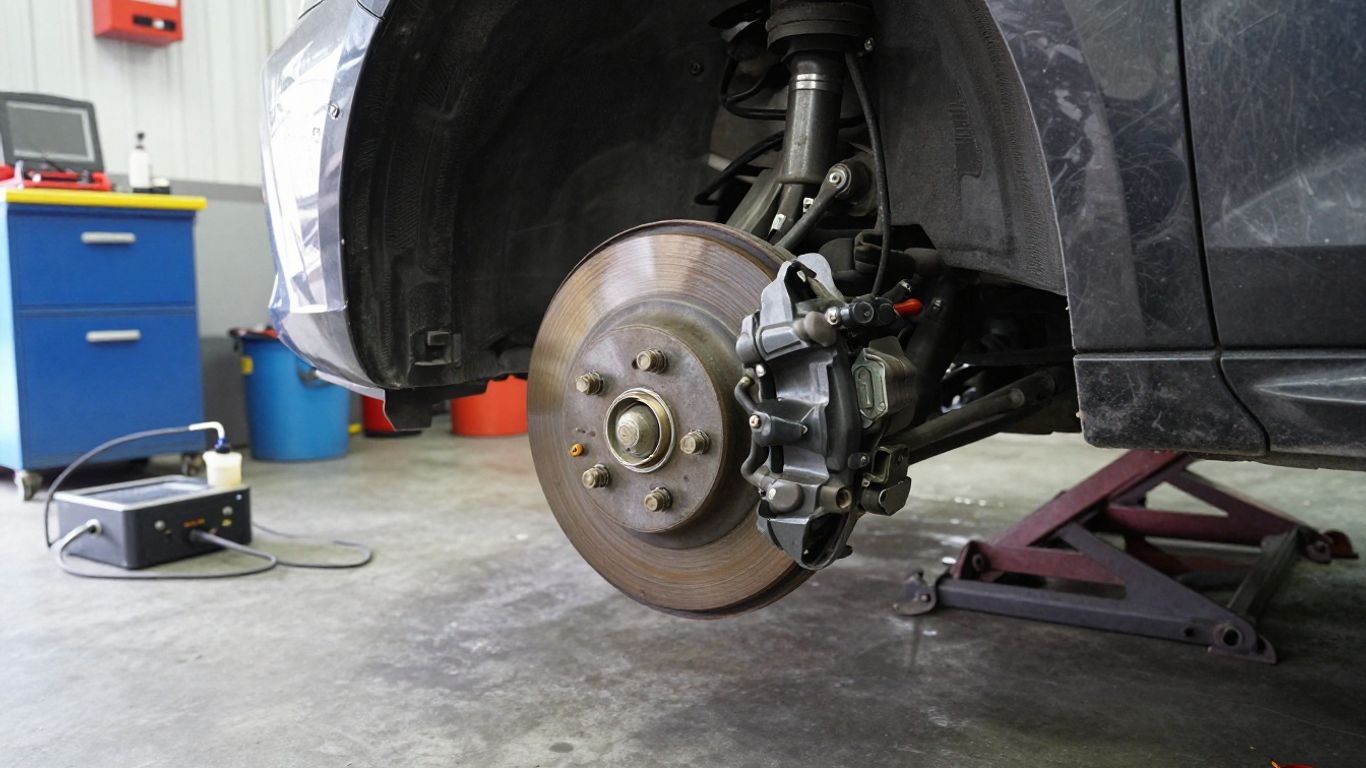
Pulsating or sinking brake pedal
A pedal that pulses during genuine ABS intervention can be normal, but pulsation during gentle dry-road braking is not something to ignore. A sinking pedal may suggest pressure loss, air, a hydraulic leak, or a master-cylinder issue. If the pedal feels inconsistent from one application to the next, stop treating the noise as an isolated nuisance.
Record whether the pedal changes with the engine running, whether pumping it alters the feel, and whether fluid is visible around the wheels or hydraulic unit. Do not keep driving simply because the pedal still works.
Longer stopping distances
An ABS fault may leave ordinary braking available while removing anti-lock assistance, but a longer stopping distance can also indicate a broader brake-system problem. Reduced tire grip, worn pads, contaminated fluid, and hydraulic faults all deserve consideration. The driver may not notice the change until an emergency stop is required.
If the car no longer stops with its familiar pedal pressure and distance, arrange professional help promptly. A noisy pump is not a substitute for measuring brake performance.
Unexpected ABS intervention at low speeds
ABS engagement just before a complete stop, especially on clean, dry pavement, can feel like a rapid pedal pulse accompanied by buzzing. An inaccurate wheel-speed signal, damaged tone ring, wiring fault, or bearing problem may falsely suggest that one wheel is slowing too quickly. The pump may be doing what it was commanded to do even though the underlying information is wrong.
A recurring low-speed event should be documented with road conditions, speed, steering angle, and whether the warning light is on. Those details help a technician investigate the signal path instead of replacing the pump by assumption.
Traction control and stability control warnings
ABS, traction-control, and stability-control warnings often share wheel-speed and control-system information. Seeing several lights together does not identify one failed part, but it does suggest that related safety functions may be limited. The frequent ABS pumping noise is another example of why cycling behavior should be investigated rather than silenced.
Treat the combination as a system fault. Drive cautiously only if braking remains normal and a professional has advised that a short trip is safe.
Why an ABS pump becomes noisy or fails
An ABS pump can become noisy because it is worn, because it is being commanded too often, or because the hydraulic system cannot maintain the expected pressure. Electrical faults may also make a healthy motor appear defective. Understanding the possible causes helps keep the diagnosis focused without turning every unusual noise into a pump replacement.
Low brake fluid or air in the hydraulic system
Low fluid can allow air into the hydraulic system or indicate a leak that needs immediate attention. Air may make the pedal feel soft or inconsistent and can cause the pump to work abnormally while trying to control pressure. Check the reservoir only as a first observation; adding fluid does not repair the reason the level fell.
Any wetness around lines, calipers, the master cylinder, or the ABS assembly should be treated seriously. Brake fluid leaks can worsen quickly.
Contaminated or degraded brake fluid
Old or contaminated fluid can affect valves, seals, and hydraulic response. Moisture and debris may contribute to inconsistent pressure control, although the exact effect depends on the vehicle and the condition of the system. A proper service may require the correct flush procedure rather than a simple reservoir top-up.
Use only the fluid specification listed for the vehicle. Mixing products or opening hydraulic lines without the correct bleeding equipment can create additional problems.
Worn electric motor or pump components
The motor, bearings, brushes, seals, and internal pump elements can wear with age and repeated operation. Wear may appear as a louder whine, grinding, slow pressure build-up, or increasingly frequent cycling. Yet the same symptoms can occur when the pump is reacting to a leak or bad command, so testing is still necessary.
A replacement decision should be based on fault codes, electrical checks, pressure behavior, and the vehicle’s service information. Guessing from sound alone is costly.
Faulty ABS module, relay, or wheel speed sensor
The control module, relay, wiring, or wheel-speed sensor can command the pump incorrectly or prevent it from operating when needed. Damaged wiring near a wheel, corrosion in a connector, or a sensor signal disturbed by a bearing can mimic a hydraulic-pump failure. This is why a complete ABS diagnosis is more useful than testing only the motor.
Before approving parts, ask which test identified the failed component. The fault code is a clue, not by itself a complete diagnosis.
How to diagnose the source of the ABS noise
Diagnosis should combine sound, timing, dashboard information, physical inspection, and electronic testing. Start with observations that are safe to make without disturbing the brake system. Then give the technician a clear account of what happened and when.
Check the dashboard warning lights and fault codes
Watch which lights appear during startup and which remain illuminated while driving. A scan tool capable of communicating with the ABS module may reveal codes that a basic engine-code reader cannot access. Record intermittent codes before clearing them, because clearing may erase useful evidence.
The unusual ABS symptoms guide is a useful reminder that an illuminated warning light and unusual noise should be considered together, not as unrelated complaints. A code still needs to be interpreted alongside live data and physical checks.
Inspect brake fluid, wiring, and visible leaks
With the vehicle parked safely, check the fluid level and look for obvious wetness, damaged insulation, loose connectors, or corrosion. Do not crawl beneath an unsupported vehicle or handle pressurized hydraulic components casually. If the reservoir is low, the cause must be found before the vehicle is returned to normal use.
Keep the inspection observational unless you have the tools, training, and service information for the vehicle. Braking systems are not a good place for trial-and-error repairs.
Compare the noise under different driving conditions
A careful description can distinguish a speed-related hum from a brake-commanded motor sound. Note whether the noise occurs at startup, during hard braking, during gentle stops, on bumps, while turning, or with the pedal untouched. Avoid deliberately provoking ABS activation in traffic; a passenger can record the sound only when it happens naturally.
For broader repair-planning decisions, the same habit of confirming the failure, parts, labour, and warranty is useful when reviewing a computer repair service, although automotive brake work requires a suitably qualified vehicle specialist.
Use professional ABS scan and pressure testing
A workshop can access ABS-specific fault data, monitor wheel-speed signals, test electrical supply and grounds, and check hydraulic pressure where the vehicle’s procedure allows. These tests can separate a failed motor from a valve, sensor, wiring, or pressure problem. They also help determine whether a complete assembly is necessary.
If diagnostic records or vehicle data are being stored by a service provider, review its privacy policy so you understand how information is handled. The mechanical priority remains accurate testing and safe repair.
A video can help explain the sound and the testing process, but online audio comparisons are not reliable enough to authorize a part replacement. Use them to improve your vocabulary when describing the fault, not as a substitute for inspection.
What to do when the ABS pump is making unusual noises
The safest response depends on brake performance, warning lights, fluid loss, and whether the noise is getting worse. A brief sound during genuine ABS activation is different from a pump that runs repeatedly at idle. When uncertain, choose the option that avoids unnecessary driving and preserves the vehicle’s braking safety.
Decide whether the vehicle is safe to drive
If the pedal is firm and consistent, the vehicle stops normally, there is no fluid leak, and the noise occurred only during ABS activation, a short trip for inspection may be reasonable. Persistent noise, warning lights, a sinking pedal, reduced braking, or an active leak changes that decision. Safety cannot be judged from the sound alone.
A local specialist can assess the car, and a reputable parts supplier can help identify the correct used, genuine, or aftermarket replacement once the failed component is confirmed. The part should match the vehicle and the diagnosis, not merely the noise description.
Avoid disabling the ABS system
Pulling a fuse, unplugging a sensor, or disconnecting the pump may silence the noise while removing an important safety function. It can also create additional warning lights and hide the evidence needed for diagnosis. Do not modify the system as a temporary fix unless a qualified technician gives vehicle-specific instructions.
Instead, limit use, keep the vehicle away from unnecessary traffic, and arrange a proper inspection. A quiet dashboard is not proof that the problem is gone.
Understand repair and replacement options
Depending on the fault, the repair may involve fluid service, wiring, a relay, a wheel-speed sensor, a module, or the complete hydraulic assembly. Some units can be repaired or supplied as an exchange component, while others require replacement and programming or bleeding procedures. The correct route depends on the vehicle and the confirmed failure.
When comparing quotes, ask whether diagnosis, labour, fluid, calibration, bleeding, programming, and warranty are included. A proactive maintenance approach, similar in spirit to proactive IT maintenance, can reduce avoidable downtime, but brake repairs must follow the manufacturer’s procedure.
Know when to have the vehicle towed to a shop
Tow the vehicle if the brake pedal sinks, stopping distance has increased, fluid is leaking, several brake warnings remain on, or the pump runs continuously. Towing is also sensible when the noise is accompanied by grinding, severe vibration, or uncertainty about whether the brakes will respond. The cost of a tow is small compared with the risk of losing braking control.
Be cautious about quick promises of a guaranteed fix or a part sold without diagnosis. The same clear, documented approach recommended for avoiding credit repair scams is useful here: confirm the fault, the work proposed, the price, and the warranty before authorizing repairs.
Conclusion
A faulty ABS pump may buzz, grind, click, or whine, but the timing of the sound and the condition of the pedal matter more than the noise alone. Warning lights, repeated cycling, unexpected low-speed ABS activity, fluid loss, or longer stopping distances call for prompt professional diagnosis. Do not disable the system; if braking feels unreliable, have the vehicle towed.
Frequently Asked Questions
What does a faulty ABS pump sound like?
It may produce a harsh buzz, grinding sound, repeated clicking, or a high-pitched whine. The sound is more suspicious when it occurs during ordinary driving, lasts longer than expected, or comes with warning lights and pedal changes.
Is a buzzing ABS pump always a sign of failure?
No. A brief buzz and pedal pulse during hard braking on a slippery surface can be normal ABS operation. A buzz during gentle stops, idling, or repeated everyday driving needs inspection.
Can a wheel-speed sensor sound like a bad ABS pump?
A sensor does not usually make the pump sound directly, but an incorrect signal can command unnecessary ABS activity. The resulting buzzing or cycling may therefore be caused by the sensor, wiring, tone ring, or bearing rather than the pump motor.
Can I drive with an ABS warning light on?
The conventional brakes may still work, but ABS and related stability functions may be unavailable. If the pedal feels different, fluid is leaking, or stopping performance has changed, do not drive the vehicle; arrange professional help or a tow.
Why does the ABS pump run after the engine starts?
A brief startup cycle can be part of a system check on some vehicles. A pump that runs continuously or repeatedly may be responding to pressure loss, a control fault, or an electrical problem and should be diagnosed.
Does low brake fluid cause ABS pump noise?
It can contribute to abnormal hydraulic operation and may indicate a leak or air in the system. Do not simply add fluid and continue driving without finding out why the level is low.
Should I replace the ABS pump based on sound alone?
No. Similar sounds can come from the brake booster, vacuum pump, wheel bearing, brake hardware, tires, or drivetrain. Scan data, inspection, and appropriate hydraulic or electrical tests should confirm the failed component first.