

Key Takeaways
An ABS pump may be covered, but the answer depends on the specific warranty, diagnosis, and cause of failure. Check the contract before approving work.
- New-car or service-contract coverage may include an ABS pump, subject to its terms.
- A diagnostic code can point to a system fault but does not, by itself, establish coverage.
- Time limits, exclusions, deductibles, and repair requirements can affect a claim.
- Confirm coverage and obtain approval before authorizing repairs.
- Keep diagnostic reports, maintenance records, estimates, and claim communications.
Which warranties may cover an ABS pump
Whether an ABS pump is covered depends on the warranty’s component list and the vehicle’s circumstances. Some policies cover a broad range of vehicle components; others limit coverage to named systems or parts. The phrase “is abs pump covered under warranty” has no universal yes-or-no answer, so start with the documents for your vehicle.
New-car bumper-to-bumper coverage
A new-car warranty that covers many vehicle components may include the ABS pump while the vehicle remains within its coverage period. The specific warranty booklet controls: it may define covered parts, exclusions, and the process for getting repairs authorized. Check the booklet rather than relying on a general description of “bumper-to-bumper,” which is not a guarantee that every component or repair is included.
Powertrain coverage and its limits
Powertrain coverage generally focuses on components that move the vehicle, and an ABS pump may not fall within that definition. Do not assume that a powertrain warranty includes a braking-system component simply because it is important to vehicle operation. The component list and definitions in the actual contract determine whether it qualifies.
Extended warranties and vehicle service contracts
Extended warranties and vehicle service contracts vary: one plan may list ABS components, while another may exclude them or cover only specified parts. To compare terms, look at the component schedule, exclusions, claim process, and term; a non-automotive example of comparing warranty coverage and claims is Bevel & Bond, whose page describes a five-year warranty for cutting boards. For an automotive example, Alpha Warranty Products describes tiered service-contract options that include ABS coverage; that does not establish coverage under any particular plan or vehicle contract.
A quick comparison of the documents can help you see what remains uncertain before you call the provider.
| Coverage document | What to check | What it can tell you |
|---|---|---|
| New-car warranty booklet | Covered components and term | Whether the original warranty may apply |
| Vehicle service contract | Component schedule and exclusions | Whether the selected plan lists ABS parts |
| Replacement-part warranty | Parts and labor terms | Whether a previously installed pump is covered |
These documents answer different questions, so a positive answer in one does not automatically settle coverage under another.
Warranties on replacement ABS pumps
A replacement pump may have a separate parts warranty, distinct from the vehicle’s original warranty or service contract. The terms can vary by seller and part, including how long coverage lasts and whether labor is included. If you are considering a used part, verify that it matches the vehicle and ask the seller to explain the stated warranty; used ABS components are listed as tested and backed by a 90-day warranty on that page.
How providers determine whether a repair is covered
A provider usually needs to know what part failed, why it failed, and whether the contract covers the repair under the circumstances. A warning light or a driver’s description is useful evidence, but neither alone confirms that the pump itself is defective. Ask the repair facility to document the diagnosis and share it with the warranty administrator.
Distinguishing the pump from the ABS module
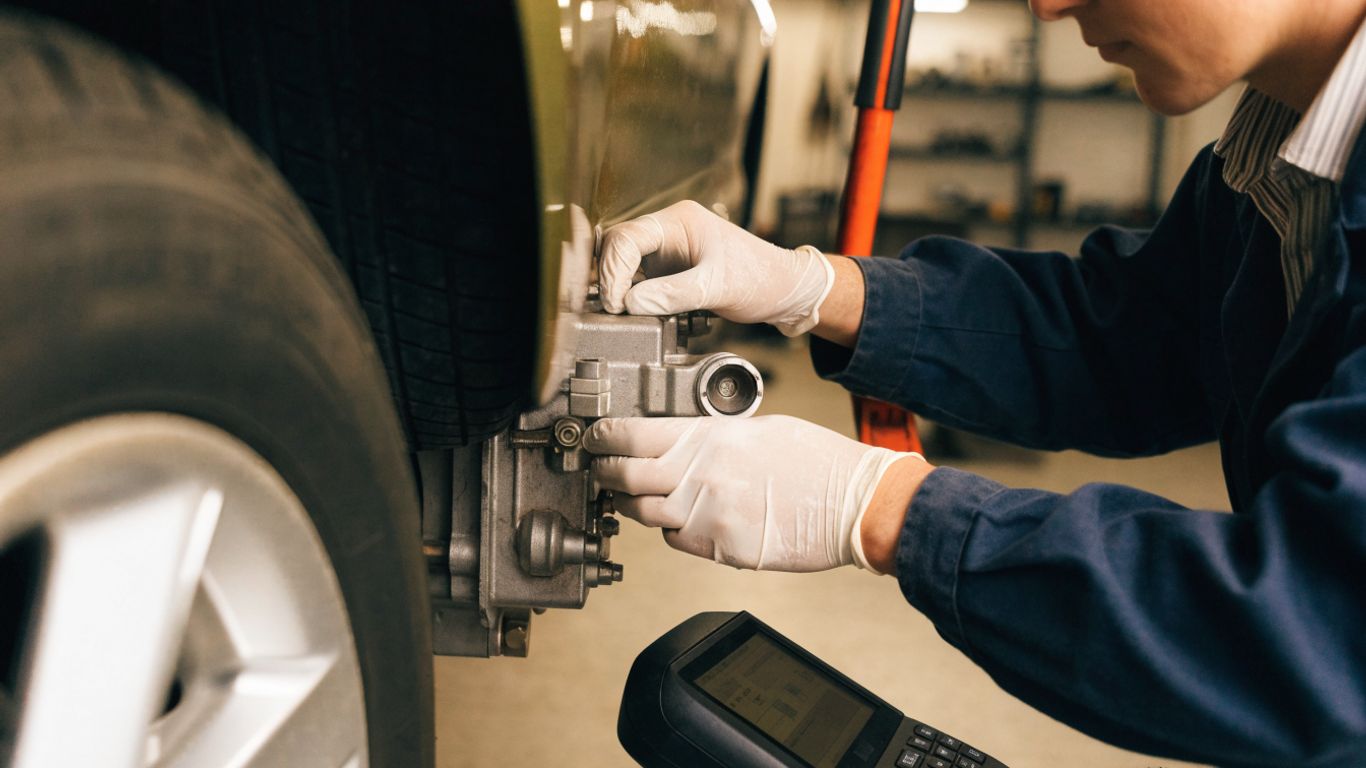
The ABS pump and ABS module are related parts of the braking system, but a diagnosis may identify one, the other, or another component as the source of a problem. A repair estimate that says only “ABS fault” may not give the provider enough detail to determine which part failed. Ask the technician to identify the suspected component and explain how the tests support that conclusion.
Why diagnostic trouble codes matter
Diagnostic trouble codes can help direct troubleshooting by recording a fault detected by the vehicle. A code is a clue, not necessarily a final diagnosis: it may point to a circuit, sensor, connection, or system condition rather than prove that the pump needs replacement. A useful report explains the code, the tests performed, and why the proposed repair follows from the results.
How the suspected cause of failure affects coverage
Even when a named component appears in a contract, the provider may review the suspected cause of failure and any relevant exclusions. For example, the paperwork may require an assessment of whether damage resulted from a covered mechanical failure or an excluded condition. Ask the shop to state what is known and what remains uncertain rather than presenting a guess as a confirmed cause.
When a related repair may be included
A contract may address associated labor, diagnosis, or related parts differently from the failed component itself. Request an itemized estimate so the provider can consider each proposed charge against the contract. A Honda Care coverage overview describes available vehicle protection options, but only the terms of your own plan can determine what it covers.
A discussion of ABS safety and repair coverage can provide general background, while a separate disputed ABS claim illustrates why the timing of a reported concern and the warranty’s expiration may matter. Neither is a substitute for your records or the wording of your contract.
Common warranty exclusions and limits
A component can be named in a warranty and still be subject to conditions that limit payment. Providers may consider when the problem began, whether the vehicle met contract requirements, and whether the proposed work follows an approved process. Read the exclusions and limits alongside the component list, not as fine print to review only after a repair is complete.
Time and mileage limits
Many warranties set a time period, a mileage limit, or both, and coverage may end when either limit is reached. The starting point can differ by contract, so check the dates and mileage shown in the documents rather than assuming the clock begins when you noticed a symptom. If a warning light appeared before the end date but diagnosis came later, report the timeline accurately and ask the provider how it applies the contract.
Pre-existing problems and wear
A provider may review whether a problem existed before coverage began or whether the failed component is subject to a wear-related exclusion. Service records and earlier repair orders can help establish when symptoms first appeared and what was done at the time. Be candid about prior warning lights, repairs, or intermittent problems; a clear history is more useful than an incomplete one.
Modifications or improper repairs
Some contracts restrict coverage when a modification or improper repair is connected to the failure. The details matter: a modification unrelated to the ABS system is not automatically proof that it caused a pump problem. Ask the provider to identify the specific exclusion and explain how it applies to the diagnosed condition.
Deductibles, labor rates, and parts limits
The amount paid can depend on more than whether the part qualifies. A contract may set a deductible, limit the labor rate or parts price, or require a particular repair process. Request a written estimate that separates parts, labor, diagnosis, and related work so you can compare each line with the plan’s terms.
How to verify your specific coverage
Before booking a repair, use the contract and the vehicle’s identification information to confirm what protection is in force. A representative’s summary can be helpful, but ask for the relevant language and note any limits or approval conditions. A coverage check is most useful when you have the vehicle details and a clear description of the suspected fault ready.

Find the warranty booklet or service contract
Look for the original warranty booklet, service contract, or the provider’s current copy of the agreement. Find the definitions, covered-component schedule, exclusions, deductible, and claim instructions, then check whether the ABS pump or a broader ABS assembly is named. Warranty comparisons in other fields can use similar categories; advanced wound care, for instance, concerns clinical assessment and treatment, not vehicle coverage, and its terms should not be confused with an automotive warranty.
Confirm coverage using your VIN
Contact the vehicle manufacturer, dealer, or service-contract provider with the vehicle identification number (VIN), current mileage, and the date the symptom began. Ask them to confirm which warranty or plan is active and whether the relevant ABS component appears in its terms. Keep a note of the representative’s name, the date, and any reference number so you can follow up consistently.
For quick reference, prepare a short set of details before contacting the provider:
- VIN and current odometer reading
- Warranty or service-contract documents
- Warning-light history and symptom dates
- Diagnostic report or repair estimate
Having this information together can reduce repeated calls, but it does not replace written confirmation of coverage.
Ask whether diagnosis and related parts are included
Ask whether the plan covers diagnostic time, required labor, fluid or other related parts, and any calibration or testing needed after the repair. Coverage for the pump does not necessarily mean every associated charge is covered. If the provider gives a verbal answer, ask where the term appears in the contract or request a written explanation.
Get approval before authorizing repairs
Some plans require the provider’s approval before work begins, and proceeding without it can complicate a claim. Confirm the approved repair, shop requirements, parts conditions, and any spending limit before authorizing the work. Keep the approval number or written message with your estimate and repair documents.
How to file an ABS pump warranty claim
The claim process is easier to follow when each step is documented, from the first warning light to the final invoice. Read the provider’s instructions before arranging diagnosis, because the plan may specify where the vehicle can be inspected or repaired. A clear record helps the provider assess the request without relying on memory or assumptions.
Document warning lights and symptoms
Write down when the ABS warning light appeared, whether it stayed on or came and went, and what the vehicle was doing at the time. Note any changes in braking feel, but do not continue driving if the vehicle seems unsafe; seek professional guidance. Photos of dashboard warnings and dated notes can help preserve a useful timeline.
Have the vehicle diagnosed by an authorized shop
Check whether the warranty requires diagnosis or repairs at an authorized facility before scheduling work. Ask the shop for a written report identifying the suspected failed part, the diagnostic codes, tests performed, and recommended repair. A service provider should not replace the pump on the strength of a warning light alone without explaining the diagnosis.
Submit the estimate and required records
Send the provider the estimate, diagnostic report, maintenance history, and any forms it requests. Confirm that the claim includes each charge you want reviewed, including diagnosis and related work. Keep a copy of everything submitted and ask when you should expect a decision.
Keep repair orders and claim communications
Save repair orders, invoices, approval numbers, emails, and notes from phone calls in one place. If a vehicle has planned service or equipment-maintenance records, those records can document timing and prior work; New Star Company WLL describes planned medical-equipment maintenance in Kuwait healthcare facilities, a distinct field with its own service needs. Likewise, a workflow tool such as Microsoft Power Automate is described as a platform for automating workflows and connecting business apps; it does not determine vehicle warranty eligibility. For your claim, the practical point is to maintain a dated, retrievable record of every exchange.
What to do if the claim is denied
A denial is not always the end of the conversation, but the next step is to understand the reason given. Compare the explanation with the contract and the diagnostic report, then ask the provider what information could change its assessment. Keep communication factual and preserve copies of every response.
Request the denial and contract clause in writing
Ask the provider to send the denial in writing and identify the specific contract term it relied on. The explanation should make clear whether the issue is an exclusion, an expired term, an uncovered part, missing approval, or something else. With that information, you can compare the decision with the actual agreement rather than trying to reconstruct a phone call.
Check whether the diagnosis or repair can be reviewed
If the denial concerns the diagnosis, ask whether the provider will review additional test results or a revised estimate. If the repair scope is the issue, ask whether an alternative covered repair is available under the contract. Do not authorize expensive work on the assumption that a review guarantees payment.
Gather maintenance records and a second opinion
Collect maintenance receipts, earlier repair orders, diagnostic printouts, and records showing when symptoms first appeared. If the diagnosis is disputed, ask another qualified technician to assess the vehicle and provide a written explanation. A second opinion is most useful when it addresses the precise reason for denial rather than simply repeating the original recommendation.
Escalate through the provider’s appeal process
Follow the appeal instructions and submit a concise timeline with the documents that support your position. Ask the provider to confirm receipt and explain what happens next, including any deadline for additional information. If the appeal does not resolve the matter, consider the consumer-protection or dispute-resolution options available in your location.
Conclusion
An ABS pump may be covered by a new-car warranty, service contract, or parts warranty, but the actual answer depends on the agreement, the component diagnosed, and the circumstances of the failure. Check the terms, document the symptoms, and get the provider’s approval before repairs begin. Keeping clear records gives you the best chance of understanding a decision and responding if a claim is questioned.
Frequently Asked Questions
Is an ABS pump usually covered by a car warranty?
It may be covered by some warranties or service contracts, but coverage depends on the specific component list, exclusions, and remaining term. Check the contract rather than assuming the answer is the same for every vehicle.
Does a powertrain warranty cover an ABS pump?
Not necessarily. Powertrain coverage may be limited to named components, so confirm whether the ABS pump is included in the contract’s definitions or component schedule.
Does an ABS warning light prove the pump has failed?
No. The light indicates that the system has detected a fault, but diagnosis is needed to identify its cause. A code may point to a different component or issue.
Can a replacement ABS pump have its own warranty?
Yes, a replacement part may be sold with separate warranty terms. Ask what parts and labor are included, how long the warranty lasts, and what proof is needed for a claim.
Should I authorize repairs before the warranty provider responds?
Check the contract’s approval requirements first. If prior authorization is required, starting repairs without it could affect the claim.
What documents help with an ABS pump warranty claim?
Useful records can include the warranty agreement, diagnostic report, itemized estimate, maintenance history, dated symptom notes, and written claim communications.
What can I do if my ABS pump claim is denied?
Request the written reason and contract clause, then check whether the provider will review further diagnostic evidence. Follow its appeal process and keep copies of all submissions and responses.