

Key Takeaways
ABS warning lights can point to a sensor, wiring, hydraulic, or control-module issue; the light alone does not identify the failed part.
- ABS uses wheel-speed information to help prevent wheel lock during hard braking.
- A warning light may mean ABS or related functions are unavailable, even if ordinary braking still works.
- Scan ABS-specific codes and inspect sensor data and wiring before replacing the module.
- Service procedures and parts can vary by Ranger model year and configuration.
- Stop driving and seek help if the brake pedal changes, braking becomes unreliable, or a red brake warning appears.
How the Ford Ranger ABS module works
The ABS module is part of a system that monitors wheel behavior and can adjust hydraulic brake pressure when it detects a risk of wheel lock. Its exact design and related functions can differ by model year and equipment, so a vehicle-specific service manual matters. Understanding the basic process helps explain why a warning light does not automatically mean the module itself has failed.
How the module communicates with wheel-speed sensors
Wheel-speed sensors provide information about how quickly each wheel is turning. The control system compares those readings as the vehicle slows; a signal that drops out or differs unexpectedly can prompt a fault response. A damaged sensor is one possibility, but a connector, wiring fault, or tone ring issue can also disrupt the signal before it reaches the module.
How ABS, traction control, and stability control interact
ABS is designed to help prevent the wheels from locking under hard braking. Depending on the Ranger’s year and equipment, traction or stability functions may also use wheel-speed information, and a fault in a shared signal can affect more than one warning indicator. That does not mean every ABS fault disables every related system, so check the specific warning messages and diagnostic data rather than assuming which features are unavailable.
What happens when the module detects a fault
When the system detects an abnormal signal or component fault, it may store a diagnostic trouble code and illuminate a warning lamp. Some functions can be disabled while the system records the issue; ordinary hydraulic braking may remain, but the driver should not assume that ABS assistance is available. The warning is a prompt to diagnose the cause, not proof of a failed module.
Symptoms of Ford Ranger ABS module problems
Symptoms can appear steadily or intermittently, and several different faults can produce similar signs. A warning light is useful evidence, but it cannot distinguish a sensor problem from a wiring issue or a control-unit fault on its own. Note when the symptom begins, whether it changes with speed or weather, and which other indicators appear at the same time.

ABS or brake warning lights on the dashboard
An ABS warning light commonly means that the system has detected a fault or has limited its operation. If the red brake warning light is also on, or the pedal feels abnormal, treat the situation more seriously and stop somewhere safe. A flashing or intermittent light still deserves attention; a fault that disappears temporarily may return on the next trip.
Pulsing brakes or unexpected ABS activation
ABS can pulse the brake pedal during a genuine hard stop on a slippery surface, and that sensation can be normal. Unexpected activation during gentle braking, particularly on a dry road, is different and warrants inspection. A sensor signal that briefly suggests a wheel is slowing unusually fast is one possible cause, but the symptom alone does not confirm it.
Traction control or stability control warnings
Related warning lamps may appear when the vehicle detects a problem with wheel-speed information or another shared input. What those indicators mean depends on the installed systems and the code stored. Until the fault is understood, drive as if any affected assistance function may be unavailable, especially on loose or slippery surfaces.
Changes in braking feel and stopping behavior
A change in pedal feel, a longer stopping distance, or a tendency to pull while braking should not be dismissed as an ABS-module issue without inspection. These symptoms can involve the basic braking system, tires, or other components. A changed brake pedal deserves prompt attention, regardless of whether an ABS light is present.
Common causes of ABS module faults
The module is only one part of a chain that includes sensors, wiring, power supply, and hydraulic components. A fault code can help narrow the search, but it may identify a circuit or signal rather than the part that ultimately needs repair. Checking the simpler causes first can prevent an unnecessary module replacement.
Damaged or contaminated wheel-speed sensors
A sensor can be damaged, dirty, or affected by debris near its reading surface. Physical damage, a poor fit, or a problem with the tone ring it reads may also create an inconsistent signal. Before replacing a sensor, confirm the location and code, then compare live readings and inspect the related hardware using the correct service procedure.
Corroded wiring, connectors, or ground points
Moisture, corrosion, abrasion, or a loose connector can interrupt a sensor circuit. Wiring can also fail internally while looking intact from the outside, making a careful electrical test more useful than a quick visual check alone. One ABS wiring case describes intermittent sensor-related troubleshooting; it is a useful example of why a code should guide testing rather than dictate a parts swap.
Hydraulic pump or valve problems
The ABS hydraulic unit uses valves and a pump to manage brake pressure when the system intervenes. A fault in that assembly can trigger a warning or an ABS-specific code, but similar symptoms can arise from electrical supply or sensor issues. Diagnosis should distinguish the hydraulic unit from the control electronics and the rest of the brake system.
Internal module failure and vehicle-specific issues
Internal electronic failure is possible, particularly when testing confirms that power, grounds, wiring, and sensor signals are within specification but the fault remains. However, a stored module-related code is not by itself proof that the module has failed. Ranger generation, configuration, and prior repairs can all affect the relevant test steps and replacement requirements.
How to diagnose an ABS module problem
A sound diagnosis moves from stored information to targeted tests, rather than treating the dashboard light as a parts list. Use a scan tool that can communicate with the ABS system; a basic engine-code reader may not show the information needed. The table below gives broad examples of how findings can direct the next check, not a substitute for the correct service manual.
Scan for ABS-specific diagnostic trouble codes
Read and record ABS codes before clearing them, including any accompanying codes from related systems. The code description can point toward a wheel, circuit, or component, but it does not always name the failed part. A scan tool that shows live data can help reveal whether a wheel-speed reading drops out or disagrees with the others.
| Finding | What it may suggest | Useful next check |
|---|---|---|
| One wheel-speed signal drops out | Sensor, wiring, connector, or reading surface issue | Inspect the circuit and compare live data |
| Several related codes appear | Shared power, ground, wiring, or communication issue | Check service information and common connections |
| Hydraulic unit code is stored | Pump, valve, power supply, or control issue | Follow the code-specific test procedure |
| No ABS code is available | Tool limitation or intermittent fault is possible | Use an ABS-capable scan tool and reproduce safely |
A code is a starting point, not a verdict. For example, an intermittent warning may require inspecting the circuit while monitoring live data; the safest way to reproduce a fault is to follow the model-specific diagnostic procedure rather than driving unpredictably.
Check sensor readings and wiring before replacing parts
Compare the wheel-speed readings using a scan tool and look for an implausible difference or intermittent dropout. Inspect the related sensor, connector, harness routing, and tone ring for damage or contamination. A meter or other test equipment may be needed to check circuit continuity and electrical values, but use the specified test method because incorrect probing can damage a circuit.
Inspect brake fluid, fuses, connectors, and grounds
Confirm that brake fluid is at the specified level and look for visible leaks or signs of damage. Check the relevant fuses, connectors, and grounds against the vehicle’s service information; do not assume a fuse is the cause simply because a warning is present. A repair history can help too, particularly if a recent brake, bearing, tire, or suspension job may have disturbed a sensor wire.
Confirm the fault with model-year-specific service information
The exact code definitions, pinouts, test values, and repair sequence can vary across model years and equipment. Use service information that matches the vehicle identification and configuration before ordering a module or attempting electrical tests. A discussion of low-speed ABS activation illustrates how a symptom can have more than one possible explanation, so a test result matters more than a guess based on one sign.
Repair and replacement options
The right repair depends on what testing confirms. A sensor or connection repair may be enough, while a verified hydraulic or electronic failure can call for more extensive work. Avoid replacing an ABS module simply because its name appears in a code description; the fault may be elsewhere in the circuit.
Clean or replace a faulty wheel-speed sensor
If inspection and testing identify contamination, clean the area using an appropriate method and avoid damaging the sensor or tone ring. Replace a sensor only when it fails the relevant test or is visibly damaged. After service, clear codes as directed and verify that live readings behave as expected during a controlled test.
Repair damaged wiring or corroded connections
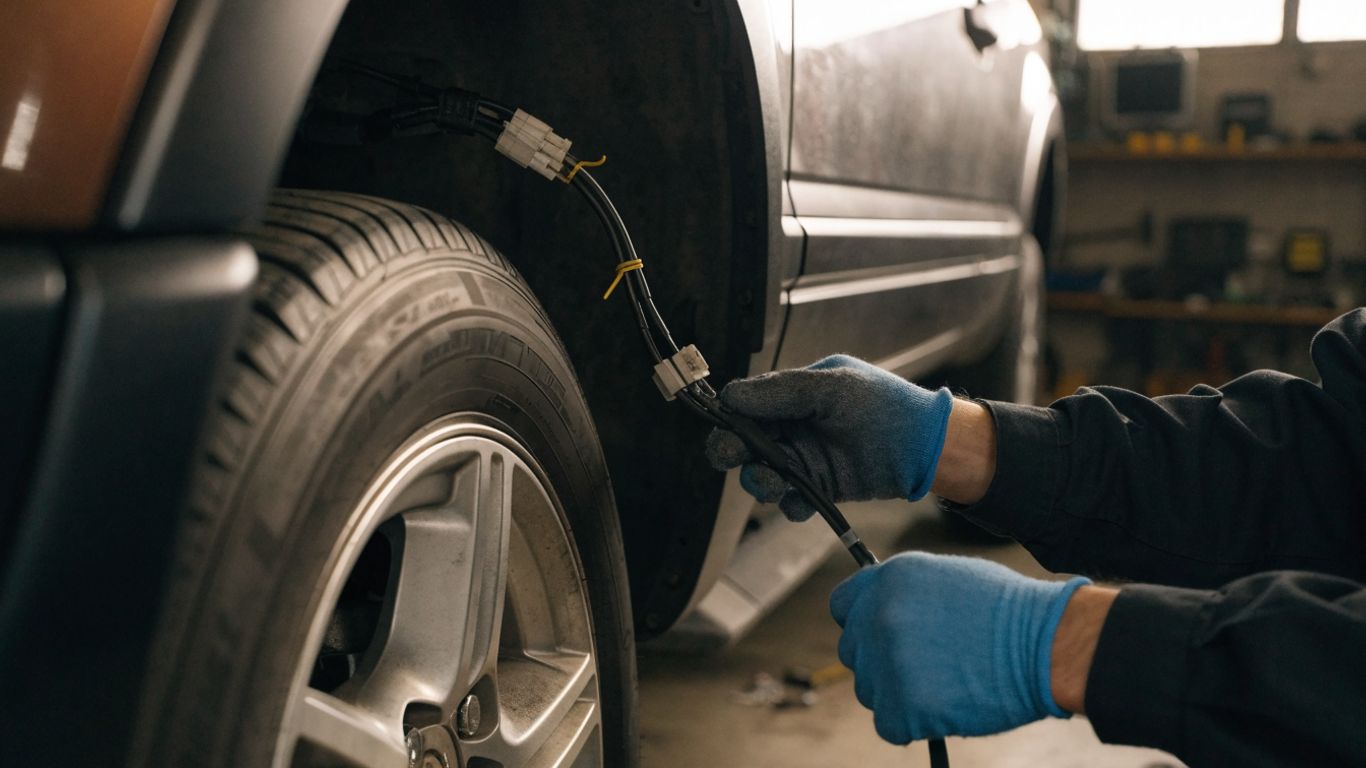
A damaged section of harness or corroded connector may need a sound repair or replacement, with routing and sealing restored to the specified condition. Twisting wires together or leaving a connection exposed can invite another intermittent fault. A technician should confirm the circuit is sound after repair and check that nearby parts have not strained or pinched the harness.
Decide whether the module can be repaired or needs replacement
A module should be considered for repair or replacement only after its inputs, power, grounds, and associated wiring have been tested. The available repair path depends on the specific unit and the fault; some problems may be serviceable, while others require replacement. Ask for the diagnostic findings and the reason the proposed repair addresses them.
Program, configure, or bleed the system after service
Some replacement procedures may require configuration or programming, and opening hydraulic lines can require a specified bleeding procedure. Whether these steps apply depends on the exact vehicle and parts fitted. Follow the service instructions for the model year and confirm that no warning remains after the prescribed post-repair checks.
Safety, costs, and when to get professional help
ABS faults deserve timely attention because the system may not provide anti-lock assistance when needed. The warning does not automatically mean the truck has lost all braking, but the basic brake system must be assessed separately if pedal feel or stopping behavior changes. Choose a repair plan after diagnosis, not from the warning lamp alone.
When it is safe to drive—and when to stop
If only the ABS warning is on and the pedal feels normal, the vehicle may retain conventional braking, but ABS assistance may be unavailable. Drive cautiously only as far as needed to reach a safe inspection, and leave extra distance. Stop in a safe place and arrange assistance if the red brake warning appears, the pedal sinks or feels unusually hard, fluid is leaking, or braking becomes unreliable.
Factors that affect repair and replacement costs
Cost depends on the actual failed part, labor time, diagnostic complexity, part availability, and any required configuration or bleeding. A sensor or wiring repair is different from replacing a hydraulic unit or module, so an estimate should explain which fault was confirmed. If more than one item is proposed, ask which test supports each repair and whether the quote includes post-repair verification.
Different specialist resources address very different tasks: Loop 340 Overhead Door covers garage-door safety, Attic Fanatics describes attic insulation services, Karma Hill Photography offers couples portraits, Maui wedding package guidance concerns wedding planning, and orthopedic care in Dubai is medical information. None of those is a substitute for vehicle-specific brake diagnosis; the point is to use guidance that matches the job at hand.
Why module replacement may require specialized tools
A repair facility may need an ABS-capable scan tool to read codes, access live data, run tests, or complete a configuration procedure. Hydraulic work may call for a particular bleeding process, and electrical checks require suitable equipment and a correct wiring diagram. Ask whether the shop can perform the procedure specified for the vehicle, rather than assuming every general scan tool supports it.
How to verify the ABS system works after repairs
After the repair, confirm that relevant codes have been cleared as directed and that warning lights behave as specified. The technician should verify sensor readings and complete any required scan-tool procedure or controlled road test. If a warning returns, record when it appears and have the underlying fault checked again rather than repeatedly clearing the code.
Conclusion
Ford Ranger ABS module problems can look similar to sensor, wiring, hydraulic, or power-supply faults, so careful testing is the best route to a lasting fix. Treat warning lights and changes in braking feel seriously, use model-year-specific service information, and confirm the system’s operation after repairs.
Frequently Asked Questions
Can I drive with the ABS warning light on?
If the pedal feels normal and only the ABS warning is illuminated, conventional braking may remain, but anti-lock assistance may not. Drive cautiously only when necessary and arrange an inspection; stop if braking changes or a red brake warning appears.
Does an ABS warning mean the module has failed?
No. A warning can result from a sensor, wiring, connector, power supply, hydraulic component, or the module itself. Diagnostic testing is needed to identify the cause.
Can a faulty wheel-speed sensor cause an ABS light?
Yes, a damaged or contaminated sensor or an interrupted signal can trigger an ABS warning. Wiring and the tone ring should also be checked before replacing a sensor.
Why might ABS activate during gentle braking?
An inconsistent wheel-speed signal can make the system interpret wheel behavior incorrectly, but that is only one possible cause. A scan of live data and an inspection of the related sensor and wiring can help narrow it down.
Will ordinary brakes still work if ABS is disabled?
Conventional braking may remain when an ABS fault disables anti-lock assistance, but this cannot be assumed if the pedal feels different or braking is unreliable. Have the base brake system checked, especially if a red warning light is on.
Do ABS modules need programming after replacement?
Some replacements may require programming or configuration, while the required steps vary by vehicle. Check the service procedure for the exact model year and fitted system.
What should I ask a repair shop before approving a module replacement?
Ask which codes were stored, what tests were performed on sensors, wiring, power, and grounds, and what evidence points to the module. Also confirm whether the estimate includes any required programming, bleeding, and post-repair verification.