

Key Takeaways
An ABS warning is a reason to investigate, but the light alone cannot identify the failed part. Watch for changes in braking, check the vehicle manual, and use ABS-capable diagnostics when needed.
- An illuminated ABS light usually means the anti-lock function needs attention; it does not, by itself, explain the cause.
- A change in normal braking or several warning lights together deserves prompt investigation.
- Wheel sensors, their wiring, tone rings, electrical supply, and ABS components can all be involved.
- ABS-specific trouble codes and live sensor readings are more useful than guessing from symptoms alone.
- If the brake system warning light appears or braking feels unsafe, stop as soon as it is safe and seek assistance.
Common ABS fault symptoms
ABS problems can announce themselves through a dashboard light, a change in pedal feel, or behavior that seems unusual during braking. Symptoms can overlap with faults elsewhere, so one sign rarely proves which part has failed. The useful first step is to notice what changed, when it happens, and whether any other warning lights appear.
ABS warning light stays on
Most vehicles briefly illuminate the ABS light when the ignition is switched on as part of a startup check. If it remains on after that check, or comes on while driving, the system has detected a fault or condition that needs attention. The light signals a problem in the anti-lock system; it does not identify the component or confirm that every other braking function has stopped working. A persistent warning is a good reason to consult the manual and arrange a diagnosis. For more on this pattern, see the guide to a persistent ABS warning.
Brake pedal feels different during normal braking
A pulsing pedal during a hard stop can be a normal sign that ABS is working, especially when the wheels are at risk of locking. A pedal that feels unusually hard, soft, slow to respond, or different during ordinary gentle braking is another matter. Take note of when the sensation occurs and whether the vehicle still slows as expected. If the change affects your ability to control the car, pull over safely and seek help rather than continuing to test it on the road.
ABS activates unexpectedly or fails to engage
ABS may activate during a sudden, forceful stop or when grip is poor; pedal pulsing and a rapid mechanical sound can accompany it. If it seems to engage during routine, dry-road braking, or the wheels lock during a situation where you expected anti-lock assistance, have the system checked. A driver’s impression alone cannot distinguish a faulty signal from changing road grip or another brake issue. A general explanation of how ABS operates can help put those sensations in context, but it is not a substitute for vehicle-specific diagnosis.
Traction control or stability control warnings appear
Some vehicles use wheel-speed information in more than one electronic system. A fault in a shared signal can therefore bring on ABS, traction control, or stability-control warnings together, though the combination varies by vehicle. Record which lights appear and whether they come on at the same time. Multiple alerts may point a technician toward a shared input or electrical issue, but the stored codes are needed to narrow it down.
Unusual noises or braking behavior accompany a warning
A warning accompanied by grinding, scraping, pulling, or a substantial change in stopping response should not be treated as a minor dashboard nuisance. Some brief noise and pedal feedback during a hard ABS stop may be expected, but persistent or new behavior in ordinary driving merits attention. Stop somewhere safe if control or braking seems compromised. Guides to ABS module warning signs discuss examples of symptoms that warrant prompt inspection.
What the ABS warning lights can tell you
Dashboard lights are clues, not a complete diagnosis. The exact meaning and color of a warning can differ between vehicles, so check the owner’s manual for the symbols used in yours. The ABS light and the main brake warning light do not necessarily mean the same thing, and seeing both together can change how urgently you should respond.
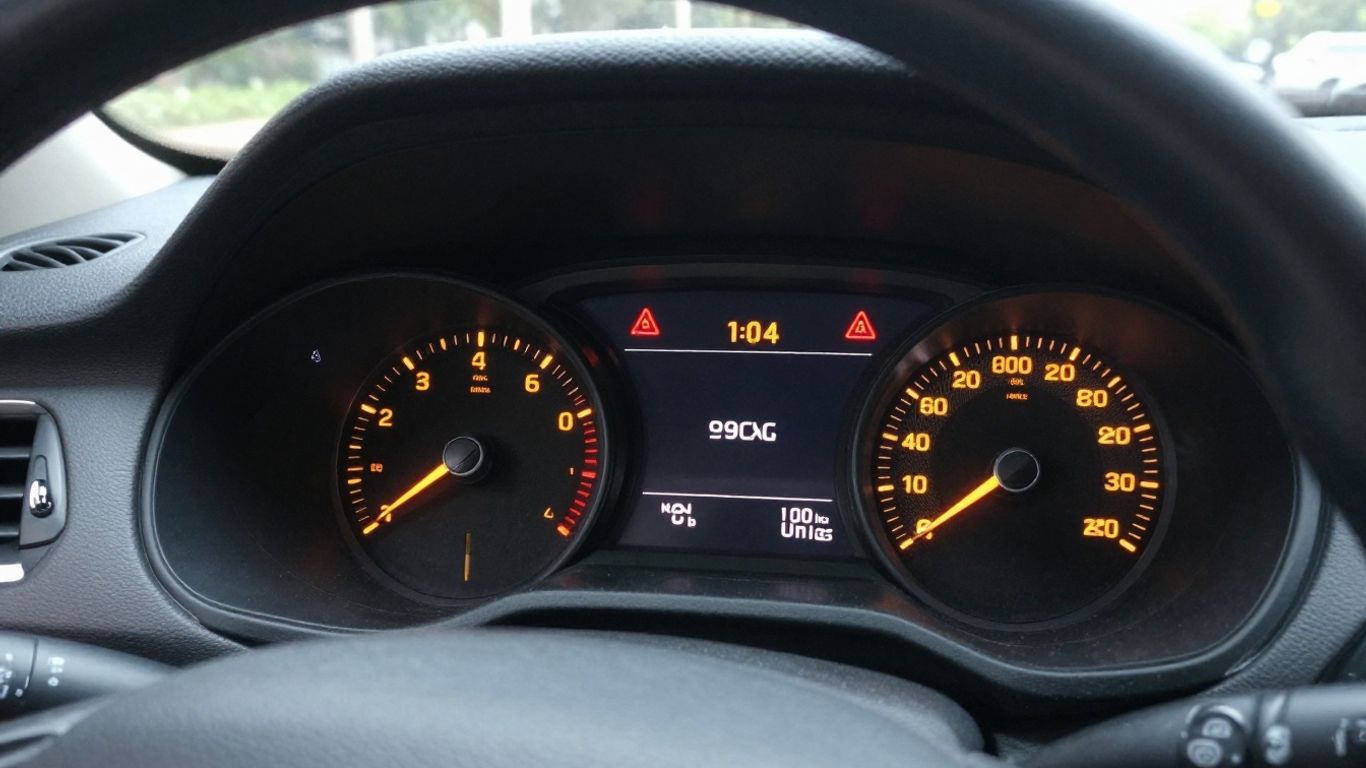
ABS light versus brake system warning light
An ABS warning generally indicates a fault in the anti-lock braking function. A separate brake-system warning may relate to a more immediate braking concern, and its meaning depends on the vehicle and the conditions in which it appears. If the red brake warning remains on, appears alongside an ABS warning, or coincides with a change in braking, consult the manual and seek prompt assistance. Do not assume that one illuminated light explains the other.
Multiple dashboard warnings and what they may indicate
Several warnings appearing together can be useful information because some systems rely on overlapping sensors or electrical signals. For example, ABS and traction-control alerts together may lead a technician to inspect shared wheel-speed inputs, while other combinations may have a different explanation. Note the full set of lights rather than focusing on just the most familiar one. The vehicle’s code data and service information are needed to tell whether the warnings share a cause.
Why the light may appear intermittently
A light that comes and goes still deserves attention. A connection or sensor signal may be affected only under particular conditions, such as vibration, moisture, or wheel movement, but an intermittent warning can also have another cause. Write down when it appears, whether the road was wet or rough, and whether the car had just started. That history can help a technician reproduce the issue instead of treating the warning as resolved simply because it disappeared.
What it means when the light turns off after restarting
A warning that vanishes after a restart may indicate that the fault is not currently being detected, but it does not establish that the underlying issue is gone. Some vehicles retain diagnostic information even after a light turns off; others may require the fault to recur before it becomes obvious. Avoid repeatedly restarting the car as a way to clear the problem. Record what happened and have the system scanned if the warning returns or braking behavior changes.
Common causes of ABS faults
ABS faults can arise from a small sensor signal problem or from a more involved component failure. The dashboard warning cannot distinguish between these possibilities, and the same symptom may have more than one cause. A scan and a physical inspection help connect the driver’s observations with the part or circuit that needs attention.
A dirty or damaged wheel speed sensor
A wheel speed sensor supplies information used by the ABS to monitor wheel movement. Dirt or physical damage can interfere with its signal, while a sensor that has failed may stop providing usable information. The sensor’s location and design vary by vehicle, so avoid assuming every car has the same arrangement. A guide to the wheel speed sensor explains its role and how a fault may affect related electronic systems.
Damaged sensor wiring or electrical connections
A sensor may be in good condition while its wiring, connector, or circuit is not. Exposure to road debris, corrosion, movement, or prior repair work can contribute to a poor connection or damaged insulation. The fault may be intermittent if the connection changes with vibration or wheel movement. A visual check can reveal obvious damage, but a circuit test is often needed to find an electrical problem that is not visible from outside.
A cracked or corroded tone ring
Some ABS systems use a toothed or otherwise encoded ring that works with a sensor to produce wheel-speed information. A crack, corrosion, missing section, or buildup can disrupt that signal. The ring’s position and form differ across vehicles, and in some designs the relevant sensing feature is incorporated into another component. Inspection needs to be specific to the vehicle rather than based on a generic parts diagram.
A failing ABS control module or hydraulic pump
The control module processes system information, and the hydraulic unit manages brake pressure for ABS operation. A fault in either can trigger a warning, but a warning light by itself is not proof that the module or pump has failed. Technicians typically compare stored codes with other test results before recommending a major component. Reported signs associated with a failing module or pump can include warning lights, wheel lock-up, or changes in braking response, but these symptoms also have other possible causes; see module and pump symptoms for additional context.
Low battery voltage or a blown fuse
ABS components depend on a stable electrical supply. Low battery voltage, a charging problem, a poor connection, or a blown fuse may affect system operation or produce a warning. Because several issues can create similar symptoms, replacing a fuse without checking why it failed may leave the underlying fault in place. A technician can verify the supply and circuit against the vehicle’s specifications.
How to diagnose an ABS problem
Good diagnosis starts with the vehicle’s own warnings and details, then moves to testing rather than parts-swapping guesses. A basic visual inspection can reveal obvious damage, but ABS faults often need a scan tool that can communicate with the anti-lock system. Be cautious around the wheels and braking components, and leave work that requires lifting the vehicle or probing circuits to someone with the right equipment.
Check the dashboard warnings and vehicle manual
Write down which lights came on, whether they stayed lit, and what the vehicle was doing at the time. The manual explains the specific warning symbols and any instructions for stopping or seeking service. Include changes in pedal feel, noises, weather, and whether the warning appeared at startup or during a drive. Those details are often more helpful than a vague report that the ABS light came on.
Look for visible damage around the wheels
With the vehicle parked securely, look for obvious damage near the wheel area, such as a loose connector or visibly damaged wiring. Do not crawl under a car supported only by a jack, touch hot or moving parts, or remove components if you are not equipped to do so. A visual check is only a first pass; a clean-looking sensor does not rule out an electrical or internal fault. If anything appears damaged, have it inspected before attempting a repair.
Read ABS-specific diagnostic trouble codes
A basic engine-code reader may not communicate with the ABS system. Use a scan tool capable of reading ABS-specific diagnostic trouble codes, and note the exact code and any supporting description before clearing anything. Codes help identify the affected circuit or system, but they do not always name a failed part conclusively. For readers exploring other practical guides, topics such as public EV charging safety, service terms and conditions, controlling room bass, general symptom guidance, and accurate page metadata are separate from ABS diagnosis and should not be treated as repair references.
Compare sensor readings and inspect electrical circuits
When a code points toward a wheel-speed signal, a technician can compare live readings from the sensors while checking the relevant wiring and connections. A reading that differs from the others may help locate the affected corner, but the sensor itself is not automatically the cause; a damaged ring or circuit can create a similar result. This is why a useful diagnostic process considers both the scan data and what is found on inspection. The goal is to identify the source of the signal problem before replacing parts.
Know when professional testing is needed
ABS diagnosis can involve vehicle-specific scan tools, electrical testing, and safe access to parts around the wheels or hydraulic unit. If a warning persists, returns, or comes with changed braking, arrange a professional inspection rather than relying on a generic code description. A compact record of the symptoms helps the workshop focus its tests:
- Which warning lights appeared, and whether they stayed on.
- When the fault occurred, including road and weather conditions.
- Any unusual pedal feel, noises, pulling, or change in stopping response.
- Whether the warning returned after a restart or appeared again on another trip.
These notes help distinguish a one-time observation from a repeatable fault. They do not replace a scan or a brake-system inspection, but they give the technician a clearer starting point.
Is it safe to drive with an ABS fault?
Whether a vehicle can be moved safely depends on the warning, the condition of the regular brakes, and how the vehicle responds. An ABS fault may leave conventional braking available while removing anti-lock assistance, but this is not guaranteed for every vehicle or every fault. Read the owner’s manual, take any brake-system warning seriously, and do not continue driving if the car feels unsafe or braking has changed significantly.
How braking may change when ABS is unavailable
If the anti-lock function is unavailable, the vehicle may not provide the same assistance against wheel lock during hard braking. That does not necessarily mean the regular brakes have stopped working, but the driver may need more care to maintain control in an emergency. The exact effect depends on the fault and vehicle design. Do not perform a sudden-stop test on a public road to check whether ABS is working.
When a warning calls for stopping as soon as it is safe
Stop in a safe place and seek assistance if braking becomes weak or unpredictable, the pedal changes substantially, the vehicle pulls sharply, or a brake-system warning appears with the ABS light. If the car cannot be controlled or slowed reliably, do not continue driving it. A warning limited to the ABS indicator may not require the same response in every vehicle, so follow the manual’s instructions and arrange prompt diagnosis rather than ignoring it.
Extra care to take in wet or slippery conditions
On wet, icy, or loose surfaces, available grip is reduced and stopping distances can increase. If you must move the vehicle after an ABS warning and the manual does not advise stopping, leave extra space, reduce speed, and avoid abrupt braking or steering. These precautions cannot restore ABS assistance or make an unsafe vehicle safe to drive. Choose a route to a repair facility only if the vehicle’s brakes remain predictable.
Why a brake system warning needs prompt attention
A brake-system warning can indicate an issue beyond the anti-lock function, so it should not be treated as simply another ABS light. Check the manual for the warning’s meaning, and seek prompt professional advice if it stays on or accompanies any change in braking. If the vehicle’s ability to stop is in doubt, arrange a tow rather than taking a chance on the road. Braking changes deserve priority over attempts to diagnose the fault yourself.
ABS fault repairs and prevention
The right repair depends on the test results, not on the warning light alone. A sensor, wiring issue, tone ring, fuse, module, or hydraulic unit may call for a different approach, and the correct procedure varies between vehicles. Once work is complete, the system should be checked again so the repair is confirmed rather than assumed.
Clean or replace a faulty wheel speed sensor
If inspection and testing confirm that a sensor is dirty or damaged, cleaning or replacement may resolve the signal issue, depending on the sensor and vehicle. Use the specified part and follow the appropriate service procedure; an incorrectly fitted sensor can create a continuing fault. If a replacement does not restore a reliable reading, the wiring, ring, or other parts of the circuit may still need attention. Confirm the diagnosis before replacing a sensor based only on a warning code.
Repair damaged wiring or tone rings
A damaged connector or wire may need to be repaired or replaced, while a cracked or badly corroded tone ring may require a component repair specific to the vehicle’s design. Address the cause of the damage where possible, such as a poor connection or a part that is not secured correctly. After the repair, check that the sensor signal is stable and that the warning does not return. The visible symptom may be near a wheel even when the underlying issue is elsewhere in its circuit.
Test and replace a failed module, pump, or fuse
A module or hydraulic pump should only be replaced after tests support that diagnosis. Technicians may need to verify power, ground, connections, and system codes before condemning an expensive unit. A blown fuse should also prompt a check for the reason it failed; fitting another fuse alone may not solve the problem. Use vehicle-specific repair information for component testing and replacement.
Confirm the repair by clearing codes and retesting
After a repair, the stored codes can be cleared using the appropriate scan tool, then the system should be retested. The technician can check whether warning lights stay off and whether relevant sensor data behaves as expected. A road test may be appropriate when it can be carried out safely and in line with the service procedure. If the warning returns, treat that as evidence that further diagnosis is needed, not a reason to keep clearing it.
Keep sensors and electrical connections in good condition
Routine care can help catch visible issues early, although it cannot prevent every electrical or component failure. Avoid pulling on sensor wires when working near wheels, and have connectors or damaged wiring inspected during relevant brake or suspension work. If replacement parts are needed, a supplier connecting customers with used, genuine, and aftermarket parts can help identify options for the vehicle; fitment should always be verified before purchase. Regular attention to warning lights and changes in braking is more useful than waiting for a fault to become severe.
Conclusion
ABS warnings are best treated as useful clues, not a diagnosis. Note what the vehicle does, consult its manual, and arrange ABS-specific testing when a light persists or returns. If braking feels unsafe or a brake-system warning appears, stop as soon as it is safe and get professional help.
Frequently Asked Questions
Can I drive with the ABS light on?
It depends on the vehicle and whether the regular brakes are working normally. Consult the owner’s manual, avoid risky conditions, and seek prompt diagnosis; stop and arrange assistance if braking has changed or seems unsafe.
Does an ABS warning mean my brakes have failed?
Not necessarily. An ABS warning often indicates a fault in the anti-lock function, but the effect varies, and a separate brake-system warning or changed braking behavior calls for more urgent attention.
Why does the ABS light come on and then go away?
An intermittent warning may relate to a signal or connection that is affected only under certain conditions, or to another fault. Record when it happens and have the system scanned if it returns.
Can a bad wheel speed sensor trigger an ABS light?
Yes, a faulty sensor can disrupt wheel-speed information and trigger a warning. Damaged wiring or a problem with the tone ring can produce similar symptoms, so testing is needed to identify the cause.
Will a basic code reader diagnose an ABS fault?
Not always. Some basic readers cannot access the ABS system, so diagnosis may require a scan tool that reads ABS-specific codes and, where appropriate, live sensor data.
Is pedal pulsing always a sign of an ABS problem?
No. Pulsing during a hard stop can be normal ABS operation. Pulsing or an unusual pedal feel during ordinary braking, especially with a warning light, should be checked.
What should I do if the ABS and brake warning lights are both on?
Check the vehicle manual and take the combination seriously. If braking has changed or the vehicle does not feel safe, stop as soon as it is safe and arrange professional assistance.